
MOQ: 500 KG | Bulk & Export Supply Only
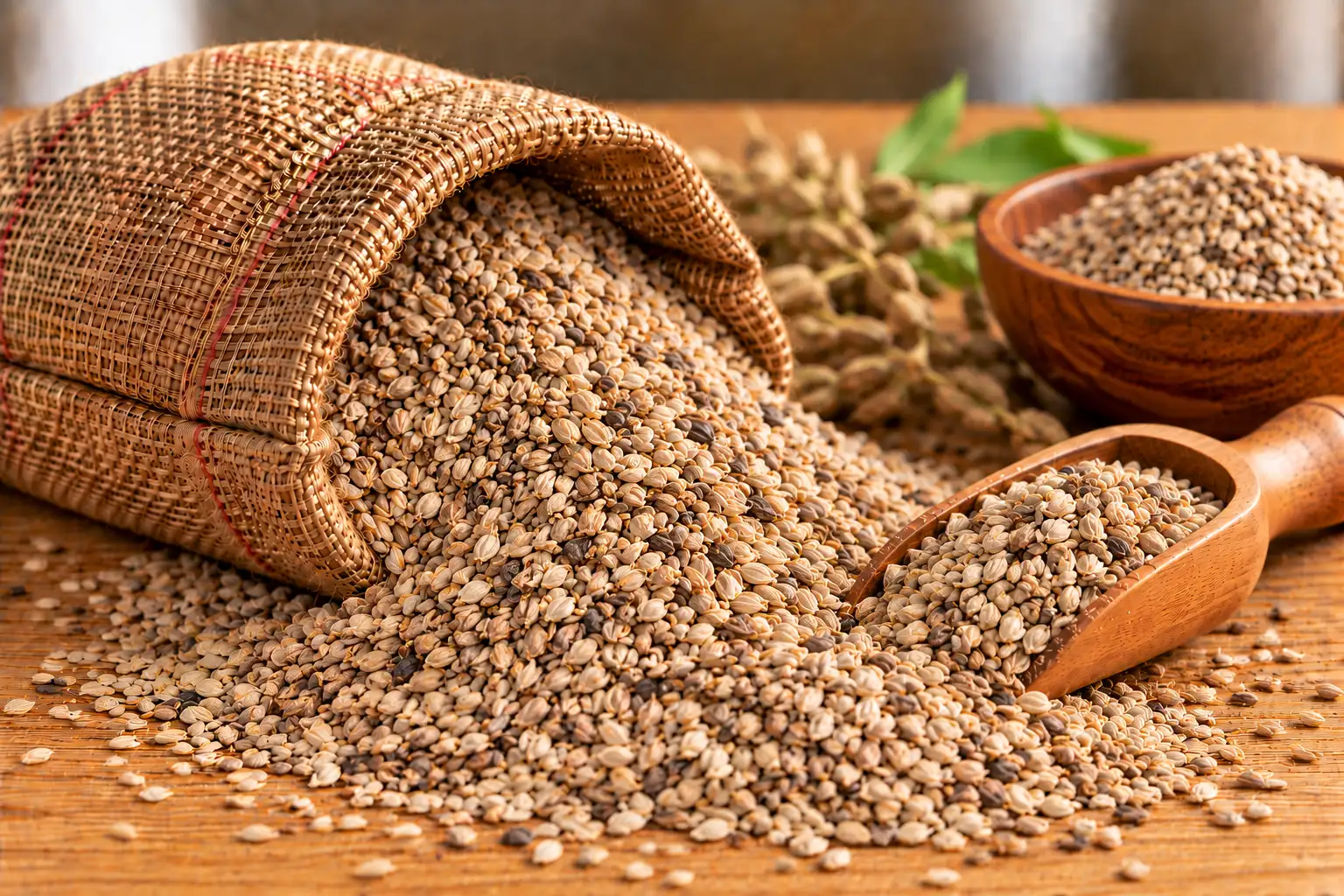
Unhulled sesame seeds are used across food manufacturing and health food applications including oil extraction, tahini and sesame paste (darker variety), bakery products, confectionery, health food bars, organic food products, seasoning blends, snack coatings, and traditional cuisine preparations. The higher fiber and calcium content makes unhulled sesame particularly relevant for products marketed on nutritional benefits.
For sesame oil producers and oil extraction units who require unhulled sesame seeds as raw material. The intact bran layer and high oil content deliver strong oil extraction yields with a fuller flavor profile.
For health food brands, organic product lines, and nutritional food manufacturers who market the higher calcium, fiber, and antioxidant content of unhulled sesame as a product differentiator.
For specialty bread, cracker, cookie, and confectionery manufacturers who use unhulled sesame seeds for their robust flavor, dark appearance, and nutritional positioning on product labels.
For manufacturers producing traditional Middle Eastern, Mediterranean, and South Asian food products where unhulled sesame seeds are the traditional and culturally preferred ingredient.
Every specification choice involves trade-offs. Understanding these trade-offs helps you specify requirements that match your actual application needs rather than defaulting to “tightest possible” specifications that may increase cost without benefit.
Unhulled sesame seeds should have uniform natural brown to dark brown color. Mixed-color seeds or seeds with grey or faded appearance indicate old stock or poor quality. Color consistency matters for products where the dark sesame appearance is part of the product identity.
Despite the bran layer, unhulled sesame seeds maintain high oil content in the kernel. Oil content varies by seed variety and growing conditions. Request oil content data in the specification sheet, especially if you are using the seeds for oil extraction or tahini production.
Unhulled sesame seeds must be thoroughly cleaned to remove sand, soil, damaged seeds, and foreign matter that may adhere to the outer bran layer. The natural bran surface can trap more foreign matter than hulled seeds. Check purity percentage and foreign matter content in the CoA.
Unhulled sesame should have a robust, nutty flavor with a natural slight bitterness from the bran layer. Excessive bitterness or off-flavors indicate old stock, improper drying, or storage damage. Conduct sensory evaluation before bulk orders to confirm the flavor profile.
Based on our experience with United States buyers, these are the most common sourcing mistakes that lead to disputes, rejections, or quality issues:
Our MOQ ensures commercial-grade production economics, consistent quality across batches, and competitive pricing for bulk buyers. Smaller sample orders can be arranged for quality evaluation.
We don’t publish fixed prices because fixed prices in agricultural commodity trading often lead to disputes, unfulfilled expectations, and buyer dissatisfaction. Here’s why requirement-based quotations work better for serious commercial buyers:
Exporting to United Kingdom requires compliance with FSA (Food Standards Agency) regulations. We provide comprehensive documentation support to facilitate smooth customs clearance and regulatory compliance.
Exporting to United States requires compliance with FDA (Food and Drug Administration) regulations. We provide comprehensive documentation support to facilitate smooth customs clearance and regulatory compliance.
Exporting to Australia requires compliance with DAFF (Department of Agriculture, Fisheries and Forestry) regulations. We provide comprehensive documentation support to facilitate smooth customs clearance and regulatory compliance.
Exporting to UAE requires compliance with ESMA (Emirates Authority for Standardization & Metrology) regulations. We provide comprehensive documentation support to facilitate smooth customs clearance and regulatory compliance.
Exporting to Canada requires compliance with CFIA (Canadian Food Inspection Agency) regulations. We provide comprehensive documentation support to facilitate smooth customs clearance and regulatory compliance.
Note: Documentation requirements may vary based on your specific product use and import license. We recommend confirming requirements with your customs broker before placing orders.
Agricultural products have inherent variability. Our quality control processes aim to minimize this variability while being transparent about what can and cannot be guaranteed.
Every production batch is tested for physical, chemical, and microbiological parameters before shipment approval.
Moisture content and particle size are monitored throughout production to ensure specifications are met consistently.
Pre-shipment samples can be provided for buyer verification to ensure production batch matches expected quality.
Once specifications are established, repeat orders follow documented specifications to maintain quality consistency.
Our Commitment: Full transparency in documentation — every shipment is accompanied by batch-specific test reports and quality records.
Finely ground dehydrated onion that dissolves instantly in liquids and blends uniformly into any formulation. Best suited for smooth sauces, gravies, seasoning mixes, processed foods, and coating applications where a consistent, invisible texture is required. Offers fast flavor release and easy handling in high-speed mixing operations.
Small cut pieces of dehydrated onion that retain visible texture in the final product. Best suited for soups, ready meals, stuffed breads, and applications where minced onion pieces add visual appeal and gradual flavor release during cooking. Requires adequate cooking time for proper rehydration.
Unhulled means the outer bran layer (seed coat) of the sesame seed has not been removed. The natural brown bran layer is left intact, preserving the seed’s complete nutritional profile including higher fiber, calcium, and antioxidant content. Unhulled sesame seeds have a darker color and more robust, nutty flavor compared to hulled white sesame.
Unhulled sesame seeds retain their outer bran layer — natural brown color, robust nutty flavor with slight bitterness, higher fiber and calcium content. Hulled sesame seeds have the bran layer removed — ivory-white color, milder sweeter flavor, lower fiber. Hulled sesame is preferred for visual appeal and mild flavor. Unhulled sesame is preferred for nutritional positioning and robust flavor.
Unhulled sesame seeds typically contain above 40% oil content in the kernel. The bran layer does not significantly reduce overall oil yield. Specific oil content for each batch is documented in the Certificate of Analysis. Unhulled sesame is commonly used for oil extraction and tahini production.
The shelf life is typically 12 to 18 months from the date of packing when stored in cool, dry conditions (15–25°C, <65% RH) in airtight packaging. Unhulled sesame seeds are prone to rancidity due to their high oil content and exposed bran surface. Proper storage is essential.
Yes, unhulled sesame seeds can be used for tahini production, producing a darker-colored sesame paste with a more robust, slightly bitter flavor compared to white sesame tahini. This style of tahini is common in certain regional cuisines and specialty markets. White sesame tahini is the standard for mainstream commercial applications.
Yes, unhulled sesame seeds have higher dietary fiber, calcium, and mineral content because these nutrients are concentrated in the outer bran layer that is removed during hulling. This makes unhulled sesame suitable for products marketed on nutritional benefits. Specific nutritional data can be provided on request.
Yes, aflatoxin testing is part of our quality control process. Aflatoxin test results are documented in the CoA for every batch. We source from suppliers who follow proper drying, cleaning, and storage practices to minimize aflatoxin risk.
Yes, we can supply unhulled sesame seeds in different color grades based on your requirements. Standard unhulled sesame is natural brown to dark brown. Specific color grade requirements should be discussed during inquiry so we can confirm availability and pricing.